

China Focus: China publishes Tokyo Trials records translation, opening new historical access
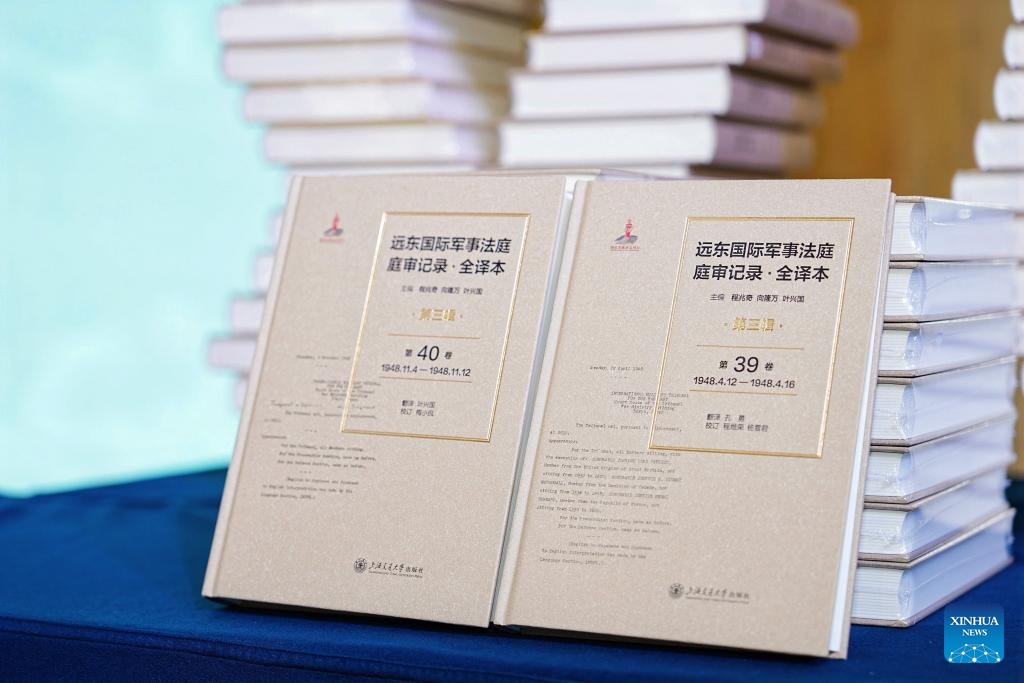
This photo taken on 三元区荆溪新闻网April 30, 2026 shows the comprehensive Chinese translation of the International Military Tribunal for the Far East records in Shaoxing, east China's Zhejiang Province. (Xinhua)
HANGZHOU, May 3 (Xinhua) -- Eighty years after the opening of the International Military Tribunal for the Far East, or Tokyo Trials, a comprehensive Chinese translation of its records has been published for the first time, offering new access to one of the 20th century's most consequential judicial proceedings.
With a 40-volume collection, the complete Chinese translation of the tribunal records spans more than 20,000 pages and 22 million Chinese characters, and was launched at Zhejiang Yuexiu University in Shaoxing, east China's Zhejiang Province, on Thursday.
The project fills a longstanding gap in Chinese-language documentation in the area. For decades, the tribunal records had been available only in English and Japanese. Their translation into Chinese, scholars noted, opens new avenues for research while broadening public understanding of the trial's historical significance.
The translation and editorial work were carried out over more than a decade by a joint team from the Research Institute of War Crimes Trials and World Peace, under Shanghai Jiao Tong University, Zhejiang Yuexiu University, and Shanghai Jiao Tong University Press.
From May 3, 1946, to Nov. 12, 1948, the International Military Tribunal for the Far East was held in Tokyo by 11 countries, including the United States, China, the UK and the Soviet Union, to try Japan's Class-A war criminals after World War II.
During the trial some eighty years ago, the tribunal convicted 25 Class-A Japanese war criminals, with seven sentenced to death, including Hideki Tojo, the most atrocious war criminal who served as Japanese prime minister between 1941 and 1944. The proceedings, backed by extensive evidence, exposed the crimes of Japanese militarism and stood as a landmark victory of justice over aggression.
Xiang Longwan, son of Chinese prosecutor Xiang Zhejun at the Tokyo Trials and an honorary director of the Research Institute of War Crimes Trials and World Peace, said the full translation would help Chinese readers better understand both the trial process and China's role in it.
Recalling his childhood, Xiang shared anecdotes about the translation work during the trial with Xinhua.
"I was very young during the Tokyo Trials. Sometimes my father would come home, only to leave again the next day. The night before, he would be typing, and the sound would wake me," the 85-year-old said.
His mother later told him that the Chinese-language evidence his father brought back often had to be translated overnight. With no time to seek outside help, she would read aloud in Chinese while his father interpreted and typed in English on the spot, before taking the materials with him the next day.
Since 2006, Xiang has devoted nearly 20 years to researching and promoting the history of the tribunal. He helped advance the establishment of the research institute and has long advocated for a complete Chinese translation of the trial records.
"The newly released complete Chinese translation provides a vital primary source for studying the tribunal, reconstructing historical truth and upholding international justice," said Chen Huadong, president of Shanghai Jiao Tong University Press, adding that access to primary sources can reshape both academic debate and public understanding of the past.
Eight decades later, concerns persist over whether Japan has fully reckoned with its history and learned the lessons. Critics point to actions by some politicians and right-wing groups, including visits to Yasukuni Shrine, perceived distortions in history textbooks, debates surrounding revisions to the pacifist constitution, and accelerating military expansionist moves.
The specter of Japanese militarism still lingers, said a Chinese foreign ministry spokesperson on Sunday. "Japan's right-wing forces are still trying every possible means to deny and distort the judgment of the Tokyo Trials and the irrefutable evidence, and even whitewash the crimes committed during the war of aggression."
"Along with the Nuremberg Trials, the Tokyo Trials nailed the fascist war criminals to the eternal pillar of shame. The historical justice delivered by the two great trials must not be denied. Their legal authority must not be challenged. And the cornerstone of the postwar international order they laid must not be shaken," the spokesperson noted. ■
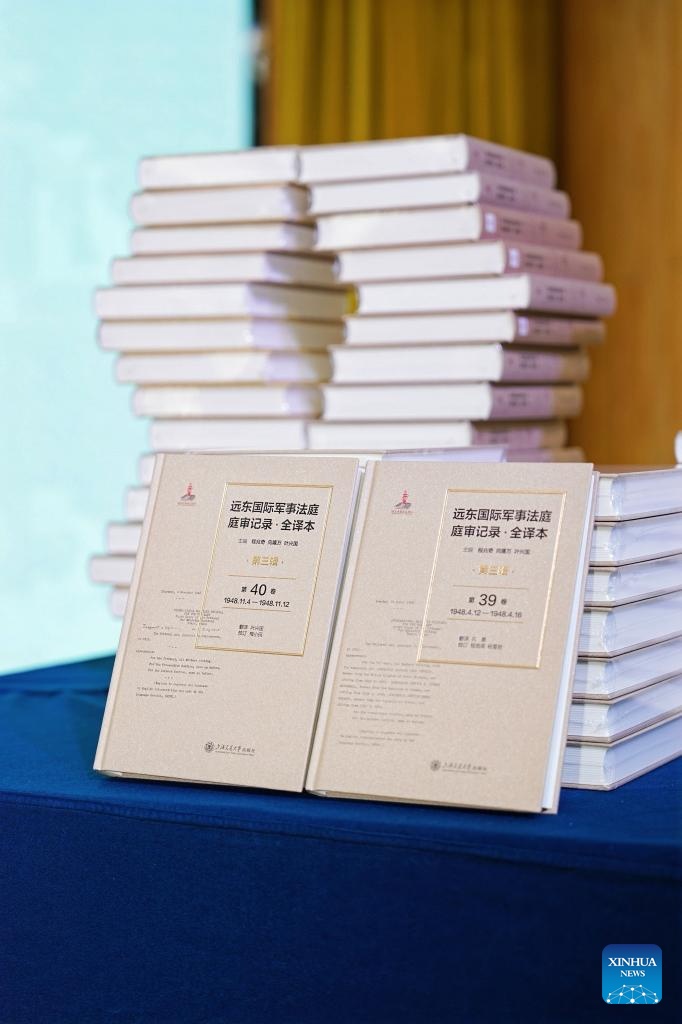
This photo taken on April 30, 2026 shows the comprehensive Chinese translation of the International Military Tribunal for the Far East records in Shaoxing, east China's Zhejiang Province.
Eighty years after the opening of the International Military Tribunal for the Far East, or Tokyo Trials, a comprehensive Chinese translation of its records has been published for the first time, offering new access to one of the 20th century's most consequential judicial proceedings.
With a 40-volume collection, the complete Chinese translation of the tribunal records spans more than 20,000 pages and 22 million Chinese characters, and was launched at Zhejiang Yuexiu University in Shaoxing, east China's Zhejiang Province, on Thursday. (Xinhua)
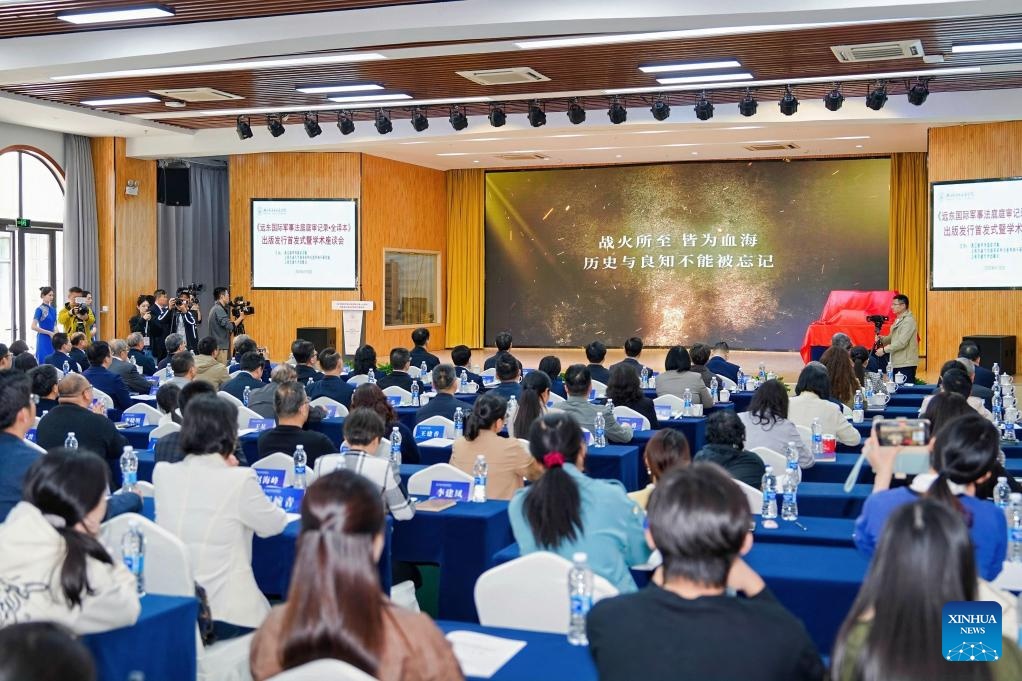
This photo taken on April 30, 2026 shows the launching ceremony of the comprehensive Chinese translation of the International Military Tribunal for the Far East records at Zhejiang Yuexiu University in Shaoxing, east China's Zhejiang Province on April 30, 2026.
Eighty years after the opening of the International Military Tribunal for the Far East, or Tokyo Trials, a comprehensive Chinese translation of its records has been published for the first time, offering new access to one of the 20th century's most consequential judicial proceedings.
With a 40-volume collection, the complete Chinese translation of the tribunal records spans more than 20,000 pages and 22 million Chinese characters, and was launched at Zhejiang Yuexiu University in Shaoxing, east China's Zhejiang Province, on Thursday. (Xinhua)
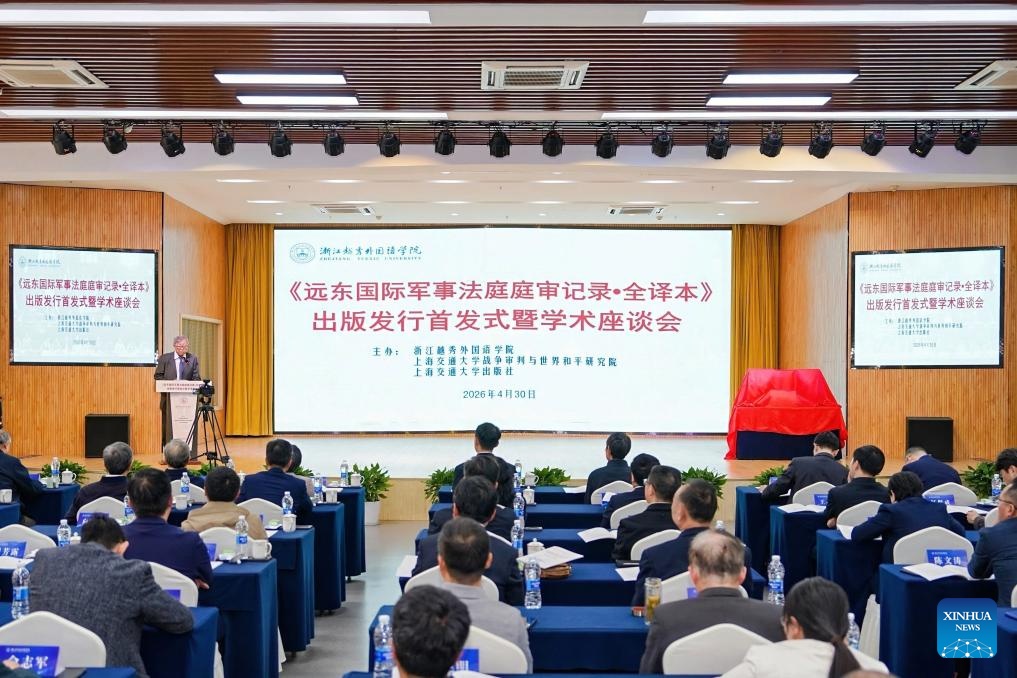
Xiang Longwan, son of Chinese prosecutor Xiang Zhejun at the Tokyo Trials and an honorary director of the Research Institute of War Crimes Trials and World Peace, speaks at the launching ceremony of the comprehensive Chinese translation of the International Military Tribunal for the Far East records at Zhejiang Yuexiu University in Shaoxing, east China's Zhejiang Province on April 30, 2026.
Eighty years after the opening of the International Military Tribunal for the Far East, or Tokyo Trials, a comprehensive Chinese translation of its records has been published for the first time, offering new access to one of the 20th century's most consequential judicial proceedings.
With a 40-volume collection, the complete Chinese translation of the tribunal records spans more than 20,000 pages and 22 million Chinese characters, and was launched at Zhejiang Yuexiu University in Shaoxing, east China's Zhejiang Province, on Thursday. (Xinhua)
- ·我国新能源营运汽车达164万辆
- ·徽州区开辟劳动实践基地
- ·陈松伶小别胜新婚 与老公机场当众激吻
- ·百岁抗战老兵列车上纵情高歌
- ·总策划徐良诚意呈现,“时间折叠”巡演以匠心重构音乐现场!
- ·欢乐六月 “绘”演“绘”玩
- ·陈慧珊丈夫申请破产 又得挑起家庭收入的担子
- ·北电导演系初试考题雷人 PM2.5入考题
- ·国家统计局:经济景气水平延续回升向好态势
- ·指尖上的端午节,健康又有文化
- ·幽默,笔记本版RTX 5090显卡,性能竟然只有桌面版的一半!
- ·北电导演系初试考题雷人 PM2.5入考题
- ·王海清:34年坚守一线的乡村“120”
- ·凤飞飞临终前点名4个人第一时间知其死讯
- ·湖北52所高校上榜!2026软科中国大学排名发布 ,武大、华科大稳居全国前十
- ·周慧敏称与倪震决定不生育 宗教信仰维系婚姻